Opening Hours : Monday - Friday, 08:00 am - 05:00pm


Location: Ghana
Crop: Maize (Zea mays L.) - Variety: Kunjor Wari (Hybrid, 90-day maturity)
Comparison: Biological (NUTREENT) vs. Synthetic (NPK 90:60:60)
To evaluate "Fertilizer-Use Efficiency" by comparing NUTREENT's biological formulation directly against the region's standard high-input chemical fertilizer regimen (NPK 90kg Nitrogen, 60kg Phosphorus, 60kg Potassium per hectare).
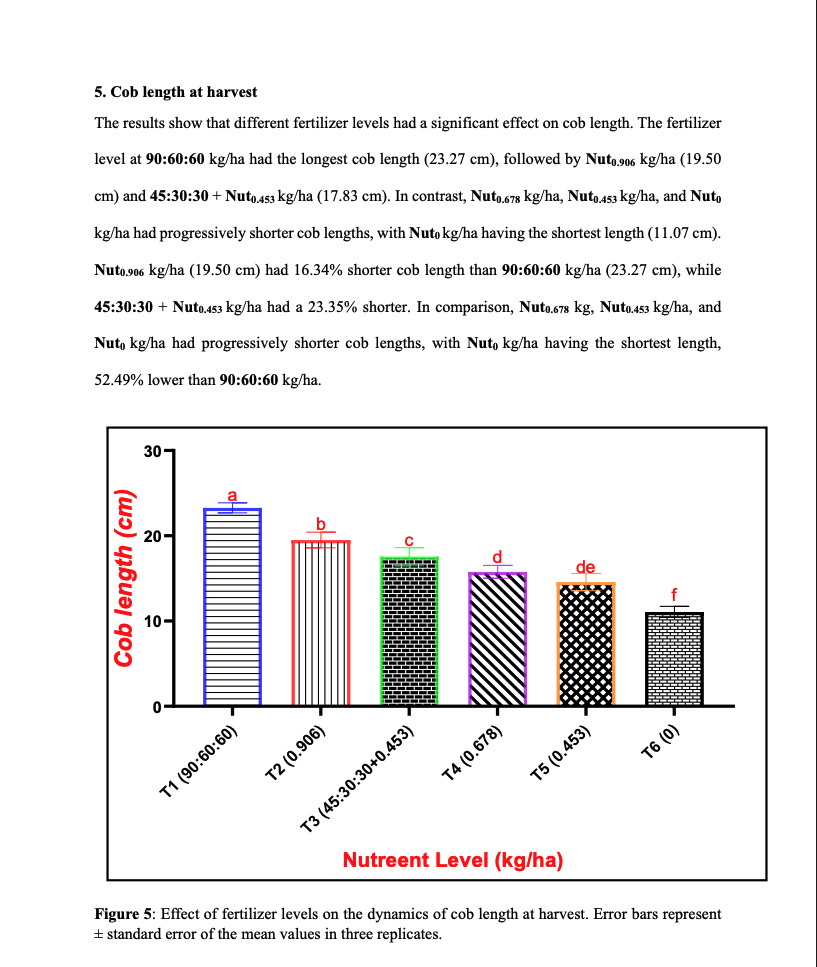
The study utilized a randomized design with six treatment levels to measure growth and yield metrics:
The findings reveal that NUTREENT is a viable, high-performance replacement for synthetic fertilizers, delivering premium harvest quality without the environmental toll of NPK.
The study also tested a mixture (T3) of half-chemical/half-NUTREENT. This treatment performed exceptionally well, often matching the full chemical dose. This suggests that farmers can immediately reduce their chemical usage by 50% by incorporating NUTREENT, maintaining high yields while lowering soil toxicity.
The data confirms that NUTREENT is a robust biological alternative. By producing yields that rival NPK 90:60:60, it allows commercial maize growers to transition away from synthetic dependence while maintaining the cob weight and grain quality the market demands.
Maximizing crop yields in agriculture increases earnings, food security, and sustainability, which aligns with farmers' major productivity goals.


.png)